By Graham Maher, Headmaster
St Edward’s is a specialised day school dedicated to boys with social, emotional, and mental health (SEMH) needs who face significant challenges in regulating their emotions, processing sensory stimuli, and engaging in social communication, and as such, exhibit unexpected behaviour.
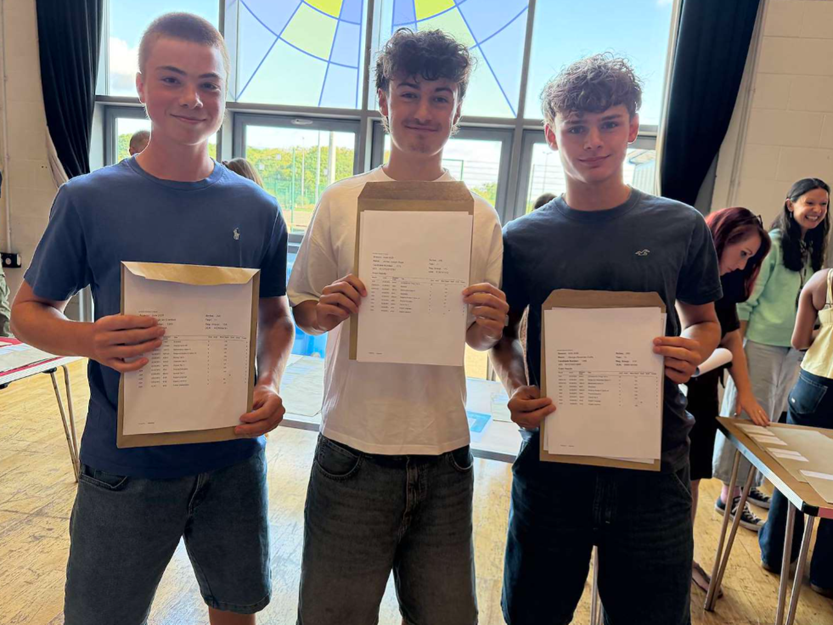
All our pupils possess Education, Health and Care Plans (EHCPs). This year, we proudly maintained a 100% pass rate in GCSEs, with our pupils progressing to various pathways, including colleges, apprenticeships and supported living arrangements. We were also judged by Ofsted to be Outstanding (September 2025) across all categories: Quality of Education, Behaviour and Attitudes, Personal Development, and Leadership and Management.
Engagement in social responsibility
As a Catholic school, we adopt a distinct approach. We hold Liturgies of the Word twice a term, commence each day with prayers, and implement a modified Religious Education (RE) curriculum. The motto of St. Edward’s, ‘Make Yourself Necessary’, instils in our pupils the understanding that they have valuable contributions to make. During the Christmas season, we partner with the Trussell Trust to support families facing financial hardship. by preparing food hampers. The essence of our school is deeply rooted in Catholic Social Teaching. We collaborate with 30 diocesan schools through our Emmaus Project to raise funds for Ugandan schools lacking access to clean water, positively impacting tens of thousands of children. One of our most fulfilling endeavours is empowering our boys to take initiative and effect change. They understand that to participate as global citizens is to have agency. To be agents of change.
In recognition of this commitment, our recently retired Head of Ethos and Mission, Steve Whelan, was honoured with the Benemerenti Medal, issued by Pope Francis, just before his passing.
Holistic education for SEND Pupils
Education for children with Special Educational Needs and Disabilities (SEND) should extend beyond the classroom or the goal of completing Year 11. At St. Edward’s, we offer an incentivised curriculum where pupils can earn participation in a programme of diverse experiences that widen their horizons, developing their Cultural Capital through exposure and socialisation. This supports commitment to the whole curriculum. Our emphasis is on nurturing relationships and facilitating communication, recognising that some pupils may lack social connections that others often take for granted.
Solidarity with the vulnerable
In our chapel, we feature a replica of the Lampedusa Cross; the original having been crafted from the remnants of a boat that tragically sank, resulting in the loss of over 300 lives seeking safety. We organised a solidarity walk to raise awareness about the refugee crisis, during which one of our boys carried the replica for the entire 12-kilometre distance, expressing his dissent against the injustices faced by refugees. Pope Francis has made it clear where our allegiance lies.
These walks occur every two years, symbolising the emotional and physical support of our pupils. Walking through the Hampshire countryside has led to some of the most rewarding conversations I've had with them.
Our community is rooted in inclusivity; while boundaries are necessary, our primary aim is to foster understanding and care rather than judgment. We are a high-nurture, high-structure provision. Historically, the middle classes have wielded significant power, and while not all our boys have access to such resources, our school does, and I am committed to leveraging them for their benefit. We rent our facilities for film sets and other events, with proceeds directed into a fund that addresses unforeseen expenses, such as providing clothing and shoes for pupils who arrive inadequately equipped.
In addition to understanding their own co-morbid needs and neurodivergence, many of our pupils have had Adverse Childhood Experiences (ACEs) and traumatic school placements prior to their admission to St Edward’s. Working relationally with our pupils as reflective practitioners supports them to develop trusting relationships with the adults around them. Our Maslow-informed practice focuses on meeting their most fundamental physiological needs and ensuring their psychological safety through a trauma-responsive approach to behaviour management, right through to helping them to develop self-advocacy skills to prepare them for adulthood. We need to ensure that they are resilient enough to manage a world that is less understanding than the environment that they experience in our school, and are ready for their next steps.
A guiding principle in our school is that if an emotional crisis can be predicted, it can also be prevented. We focus on environmental factors and categorise behaviour as either expected or unexpected, rather than good or bad. When pupils become dysregulated, it signals unmet needs, and understanding this dynamic allows us to anticipate and mitigate future issues.
Advocating against exclusion
I feel a deep sense of frustration on behalf of our boys for several reasons. Society often seeks simplistic solutions to complex issues, with some tabloids suggesting exclusion or imprisonment as viable responses. However, it is crucial to recognise that the vast majority of individuals within the prison system struggle with social communication. By addressing the underlying causes, we can help keep young men, particularly those with SEND, out of the judicial system. To quote the Education Secretary, Bridget Phillipson, ‘The challenges facing kids are complex and profound.’ The pathway from exclusion to incarceration is all too familiar.
Commitment to stability and relationships
We do not employ supply staff, which contributes to high staff retention rates. Strong educational relationships are essential; introducing unfamiliar staff can lead to crises for pupils who thrive on consistency. An outsider might misinterpret a pupil’s behaviour as intentionally disruptive, but what they may need is playfulness, acceptance, curiosity and empathy. When pupils are in a regulated state, they can articulate what went wrong and identify their triggers. Over time, younger pupils will learn to recognise and communicate their feelings in an environment that affirms their worth and individuality, rooted in the message that, “you are heard, you matter, you belong and you are safe.” All pupils and staff live by the tenet of Imago Dei. We have all been made in the image of God. This helps us recognise where ignorance may have led to fear, and replace it with acceptance and a celebration of difference – even our own.
I understand the challenges faced by pupils with SEND in mainstream settings. While I advocate for inclusion, the reality is that our boys would likely be excluded within weeks in a large classroom environment. Transportation for pupils with SEND also incurs substantial costs, and many of our students rely on local authorities to cover these expenses. We are collaborating with Hampshire County Council’s ‘Spend to Save’ scheme, which helps mitigate the high cost of transport, often through taxis. We are at the start of this journey, but we hope to widen the provision in the coming months.
Expertise for mainstream settings
Educators across all schools must acknowledge the impact of a child’s trauma history on their capacity to engage in education and, indeed, their communities. Trauma-sensitive and responsive practices should be an integral part of teacher training, particularly given the increasing number of EHCPs. Special school staff can serve as consultants, like medical or social work professionals, supporting mainstream settings to better accommodate these pupils.
While the principles of Catholic Social Teaching permeate our school, most staff members and pupils are not Catholic. Nonetheless, this institution embodies the most Catholic spirit I have encountered in my career. We see ourselves as brothers and sisters in a shared journey of belonging, echoing Pope Francis' message in Fratelli Tutti.
Find out more about Catholic education in the Diocese of Clifton